
A midi skirt is a skirt with a hem that falls below the knee and around the mid-calf, making it one of the most adaptable skirt lengths for everyday, work and occasion dressing. This length offers coverage without feeling heavy and structure without stiffness, making it one of the most versatile pieces in a woman's wardrobe.
Who does it suit? Midi skirts can work well on almost every body type and height — the key is choosing the right cut, fabric and styling for your proportions.
Quick Answer: What Is a Midi Skirt?
A midi skirt generally falls below the knee and around mid-calf. The best style depends on your proportions, preferred fit, fabric and occasion. A-line, pleated, pencil, wrap and bias-cut styles offer different silhouettes, while high-waisted designs can help create a longer-looking leg line.
How Long Is a Midi Skirt?
Midi skirt length varies significantly based on your height, torso length, leg length and the skirt's rise and construction. There is no universal midi-skirt measurement by height, so use these figures only as rough starting points rather than fixed rules.
General measurement guide by height:
Petite (under 5'4"): 25–27 inches from waist to hem
Average (5'4"–5'7"): 29–31 inches from waist to hem
Tall (over 5'7"): 31–34 inches from waist to hem
Choose a hem position that feels balanced with your proportions and footwear. Try the skirt at several lengths and choose the point that feels balanced with your shoes, proportions and the silhouette you want.
Midi vs. Mini vs. Maxi
Skirt Type | Hem Position | Typical Use |
Mini | Well above the knee (mid-thigh or higher) | Casual, party wear |
Midi | Below the knee, around mid-calf | Versatile: work, casual, occasions |
Maxi | Ankle-length or floor-length | Casual, boho, formal |
How to Choose the Right Midi Skirt
Choosing the right midi skirt involves five key considerations:
1. Choose the Silhouette
Different silhouettes create different looks and work better for different occasions and body types.
A-Line Midi Skirt
Fits at the waist and flares out toward the hem. A-line silhouettes can create waist definition and skim the hips, making them a versatile option for different proportions.
Pleated Midi Skirt
Features structured folds that add movement and texture. Works well for office or smart-casual settings. The pleats create visual interest without adding bulk.
Pencil Midi Skirt
Offers a sleek, fitted silhouette from waist to hem. Depending on the fabric, fit and whether it has a slit or stretch, pencil styles can offer less freedom of movement than fuller silhouettes. Best for professional settings or when you want a more tailored look.
Wrap Midi Skirt
A wrap-style midi with a tie or button closure. This style works well for creating waist definition and suits many body types, especially rectangle/straight shapes. The adjustable fit is useful if your waist measurement fluctuates.
Bias-Cut Midi Skirt
Soft, draped silhouette that follows the body more closely and works particularly well for evening or elevated casual outfits. Its soft drape can work well if you prefer a silhouette that follows the body without feeling overly structured.
Checked/Kilt-Style Midi Skirt
Brings buckle details and heritage-inspired patterns (like plaid or tartan) for a preppy, trend-forward look.
2. Choose the Right Length
Refer to the height-based measurement guide above, but remember: the "ideal" length is personal. Consider:
Your height and leg-to-torso ratio
The shoes you'll wear most often (heels vs. flats)
The occasion (office vs. casual vs. evening)
Your comfort level with showing leg
3. Choose the Right Fabric
See the detailed fabric guide below. Key considerations:
Occasion: Office (structured fabrics) vs. casual (breathable fabrics) vs. evening (luxe fabrics)
Season: Summer (lightweight) vs. winter (warm)
Comfort: Stretch for all-day wear
Care: Machine washable vs. dry clean only
4. Choose the Right Waist Fit
High-waisted: Sits at or above the natural waist. High-waisted styles can help define the waist and create a longer-looking leg line if that is the effect you want.
Natural waist: Sits at your natural waistline.
Elasticated waist: Offers comfort and flexibility, especially for casual or weekend wear.
Adjustable (wrap/tie): Useful if your measurements fluctuate or you want a customizable fit.
5. Consider Your Wardrobe & Lifestyle
Think about how the skirt will fit into your existing wardrobe:
Work-heavy wardrobe: Prioritize office-appropriate fabrics and silhouettes
Casual lifestyle: Focus on comfortable, easy-care fabrics
Versatility seekers: Choose neutral colors and classic silhouettes
Trend-focused: Experiment with patterns, details and seasonal styles
Midi Skirts for Different Body Shapes
Important note: Body shape guidance is meant to be helpful, not prescriptive. Fashion is personal — wear what makes you feel confident. These suggestions are based on common styling principles, but your preferences matter most.
Hourglass Shape
If you want to emphasize your waistline: High-waisted pencil skirts or A-line midis that gently skim the hips can be useful options.
Why it works: These shapes emphasize your natural waistline while maintaining balanced proportions from shoulder to hip.
Pear Shape (hips wider than waist)
If you want to balance your proportions: A-line or pleated midis that flow gently away from the hips can work well.
Why it works: The flared cut draws attention upward while skimming over the lower body, creating harmony between your top and bottom half. Tuck in your top to highlight your waist.
Apple Shape (fuller mid-section)
If you want a flattering, comfortable fit: Bias-cut or softly pleated skirts in drapey fabrics may work well.
Why it works: These materials move fluidly and don't cling to the tummy. A slightly higher waist can help define the waistline and create a longer-looking leg line, while flowy fabrics can add ease without bulk.
Rectangle / Straight Shape
If you want to create waist definition: Wrap skirts, pleated skirts or styles with belts or ruching can help.
Why it works: Details like belts and ties help define the waist, while pleats and wraps introduce soft movement, adding curves where you want them.
Midi Skirts for Different Heights
Height and proportion affect how a midi skirt looks and feels. Here's how to choose based on your height category.
Petite (Under 5'4")
What to look for:
High-waisted styles to elongate legs
Front slits or streamlined shapes for added length
A hem that sits slightly below the knee can be a useful starting point for petites, but the best position depends on your proportions and the skirt's cut.
If you prefer a streamlined look, smaller prints and less fabric volume can create a more visually compact silhouette
Why it works: High waistlines elongate your legs and a vertical slit adds length and lightness. Standard midi lengths may land lower on petite frames, so check actual measurements carefully.
Average Height (5'4"–5'7")
What to look for:
Most midi styles will work well
Hem typically falls between knee and mid-calf
Experiment with different silhouettes to find your preference
Why it works: Average height offers the most flexibility in midi styling. You can play with volume, length and details without worrying about overwhelming your frame.
Tall (Over 5'7")
What to look for:
Longer midi lengths may work well, depending on your proportions and the skirt's rise.
Fuller silhouettes (pleated, A-line) work well
Taller proportions give you more room to experiment with longer hems, fuller pleats and larger patterns if those are your preferred styles
Why it works:Longer hems and fuller silhouettes can be especially easy to experiment with on taller frames, depending on your proportions and personal style.
Universal Styling Tips
These tips work across body types and heights:
Define Your Waist
Tucking in your top or adding a slim belt can instantly enhance proportion and give your outfit structure.Choose the Right Fabric
Heavier fabrics like cotton twill or denim hold their shape and offer structure, while flowy fabrics like silk or chiffon create movement and softness.Pay Attention to Length
Choose a hem position that feels balanced with your proportions and footwear. This keeps the look elegant without shortening your height.Balance Your Footwear
Heels or wedges elongate the legs. Pointed flats or ankle boots add polish without heaviness. Avoid shoes that cut across the ankle, as they can make the legs look shorter for some people.Monochrome or Tonal Styling
Wearing similar shades for your top and skirt creates a vertical, uninterrupted line, making your frame look taller and more refined.
How Should a Midi Skirt Fit?
Waist: The waistband should sit comfortably at your natural waist (or where the style is designed to sit) without digging in or gaping.
Length: As mentioned, the ideal midi length typically falls between the knee and mid-calf. Exact measurements vary by height, brand and intended silhouette — use the height-based guide above as a starting point.
Stretch & Movement: For fitted or pencil styles, a small amount of elastane can improve comfort and ease of movement. You should be able to sit, walk and move freely without the skirt pulling or restricting.
Try this test: Stand sideways in front of a full-length mirror. If the skirt feels balanced with your proportions, you've likely found a good length.
Best Fabrics for Midi Skirts
Fabric | Best For | Notes |
Cotton blend | Casual, everyday wear | Breathable and easy to care for. Ideal for spring and summer. |
Polyester/rayon blend | Office, formal wear | Structured and wrinkle-resistant. Holds shape well throughout the day. |
Wool blend | Winter, formal occasions | Warm and cozy. Look for merino wool blends for extra softness. |
Silk or satin | Evening, special occasions | Luxe and drapey. Requires more careful handling. |
Denim | Casual, weekends | Durable and structured. Works well for A-line or pencil styles. |
Linen / Linen Blend | Summer, casual | Lightweight and breathable, but may wrinkle more easily. |
Elastane mix (small %) | Fitted or pencil styles | Adds stretch and movement. Especially useful for pencil or fitted styles. |
Sustainable options: Look for organic cotton, Tencel/lyocell or recycled fibers if material sourcing is an important factor for you.
How to Style a Midi Skirt
Casual Day Out
Oversized sweater or fitted tee + sneakers or flat sandals + crossbody bag. For warmer days, opt for a cotton or linen midi skirt in a light color or print.
Office / Work
Fitted blouse or button-down + structured blazer (optional) + pointed-toe flats or low heels + structured tote or satchel. A pencil or pleated midi in a neutral color works best here.
Date Night / Evening
Fitted top or camisole + heeled ankle boots or strappy heels + statement jewelry. A silk or satin midi skirt adds a touch of elegance.
Winter Layering
Turtleneck or chunky knit sweater + knee-high boots + long wool coat + opaque tights. A wool-blend midi skirt keeps you warm while maintaining a polished silhouette.
Summer
Light cotton or linen midi + fitted tank or cropped top + sandals + straw hat (optional). Stick to breathable fabrics and lighter colors to stay cool.
Checked & Plaid Midi Skirts: AW26 Trend
Checked and plaid patterns are appearing in Autumn/Winter 2026 fashion coverage, particularly in heritage-inspired styling.
Why it's trending:
Heritage-inspired aesthetics are having a moment
Checks add visual interest without needing bold colors
Versatile enough for both casual and smart-casual settings
Works well with neutral tops (black, white, camel, navy)
How to wear it:
Pair a checked midi with a solid-colored top to let the pattern stand out
For office wear, choose subtler checks in muted tones
For weekends, bolder plaids work well with sneakers or ankle boots
Note: If you're new to patterns, start with a smaller check — it's easier to style and feels less overwhelming.
Common Midi Skirt Shopping Mistakes
Buying purely based on trend without considering your body shape
Not every trending style works for every body type. Focus on what flatters your proportions first.Ignoring fabric quality
Cheap fabrics can wrinkle easily, lose shape after a few wears or feel uncomfortable against the skin.Not paying attention to waist fit
High-waisted styles can help define the waist, but only if they fit comfortably at your natural waist.Buying a skirt for only one occasion
A versatile midi that works for work, weekends and evenings offers far better value.Skipping the length check
Many people order based on photos without verifying the actual length. Always check the garment measurement (waist to hem) before buying.Forgetting about undergarments
Some skirts require specific shapewear or slip skirts for a smooth look. Consider this when choosing fabric and fit.
Midi Skirt Styles Worth Considering in 2026
If you're after a heritage-inspired checked midi skirt that's trendy and versatile, here are two of this season's standout picks:
1. Black Watch Check Kilt
A cotton-blend A-line kilt in the classic Black Watch check, with buckle detailing at the waist and a side zip closure. Perfect for a preppy, heritage-inspired look.
Pros:
Breathable cotton-blend fabric — comfortable for everyday wear
A classic check pattern that never really goes out of style
Buckle detailing adds a polished, put-together finish
Cons:
Structured fit, so don't expect much stretch or movement
Dry clean recommended, which means a bit of extra care
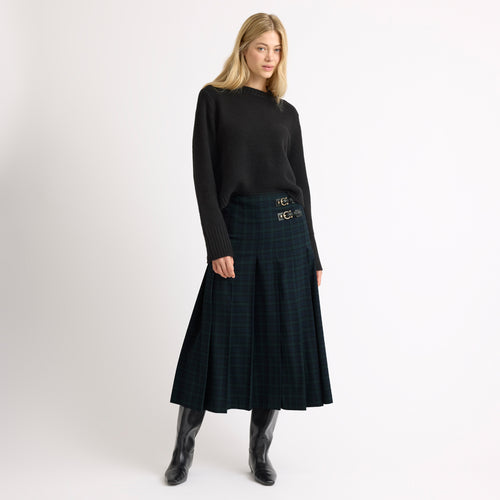
Black Watch Check Kilt
A modern take on a timeless kilt, featuring black and green check fabric, a flattering A-line shape and sharp knife pleats. Double buckle straps and a concealed side zip complete the look.
2. Plaid Check Full Skirt
A full, flared A-line silhouette in a bold plaid check, with an elasticated back waistband and side pockets — comfort and style in one.
Pros:
Elasticated waist — great for all-day comfort
Side pockets — practical and functional
Bold plaid pattern works well as a statement piece
Cons:
The full silhouette may feel a bit overwhelming on petite frames
Slightly more casual than what structured office looks call for
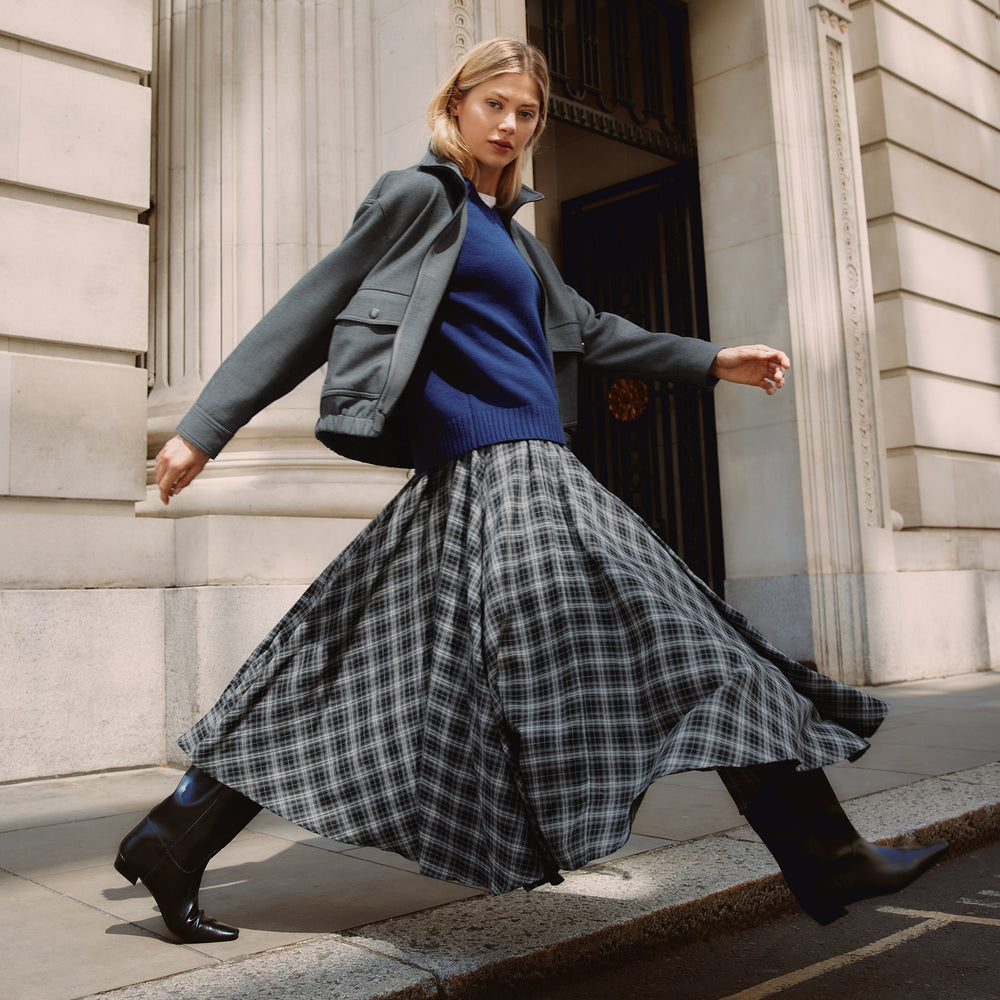
Check Full Skirt
A timeless grey and black check full skirt made from lightweight fabric with a circle cut for beautiful movement. An elasticated back waist and practical side pockets add comfort and everyday functionality.
How to Care for Your Midi Skirt
Always check the fabric care label — many wool or rayon blends require dry cleaning or hand washing.
Hang pleated skirts instead of folding them to prevent the pleats from flattening.
Unfasten buckle or belt details before folding to help the skirt keep its shape.
If machine washable, stick to a cold/30°C wash and low-heat iron.
Store in a breathable garment bag during off-season to prevent moth damage (especially for wool blends).
For stubborn wrinkles, use a steamer instead of an iron — it's gentler on delicate fabrics.
Conclusion
A midi skirt can become a versatile wardrobe staple when you choose the right fit, fabric and style for your lifestyle. The key isn't finding the "perfect" body type for the skirt, but rather the perfect midi for your body type.
Bottom line: Choose a style based on your body shape and lifestyle, don't overlook fabric quality and pick a piece that can carry you through multiple occasions. If you're unsure where to start, a high-waisted A-line midi in a neutral color is an easy-to-style option that works across many wardrobes.
Frequently Asked Questions
Midi skirts can work well on many body types. The best choice depends on the silhouette, fabric, waist position and proportions you prefer. A-line styles are a versatile option because they define the waist and gently skim the hips.
Yes. A checked midi skirt can work for the office when the pattern is relatively subtle and the fit is polished. Pair it with a solid-colored blouse, structured jacket or blazer, and refined footwear.
A midi skirt can be styled for winter with a turtleneck or sweater, knee-high boots, opaque tights and a long coat. Wool-blend fabrics can provide additional warmth.
The best fabric depends on the occasion and season. Cotton blends work well for casual wear, polyester-rayon blends can suit office outfits, wool blends are useful for colder weather, and silk or satin can work well for evening occasions.
A midi skirt generally falls below the knee and around the mid-calf. The ideal length varies by height, proportions, skirt construction and personal preference, so garment measurements are more useful than a fixed rule.
The midi length is a long-standing wardrobe style, while specific silhouettes, fabrics and patterns change with fashion trends. Checked and heritage-inspired details are among the seasonal styling directions discussed for 2026.
Yes. Petite women can wear midi skirts by choosing a length and silhouette that work with their proportions. High-waisted styles, streamlined shapes and carefully chosen hem positions can help create the desired overall look.