
Choosing a lightweight sleeping pad isn't just about finding the lowest weight. You also need enough insulation, cushioning and durability for the conditions you'll face.
This guide breaks down weight, R-value, pad types and the features that matter most when choosing a hiking sleeping pad in 2026.
What Makes a Sleeping Pad Lightweight for Hiking?
There’s no official weight cutoff for a “lightweight” sleeping pad, but hikers and backpackers generally use weight as a quick way to compare different options. As a simple guide:
Ultralight (under 12 oz): Designed for hikers who prioritize the lowest possible pack weight. These pads may use lighter materials or offer less cushioning to keep weight down.
Lightweight (12–16 oz): A practical range for many three-season backpackers, offering a good balance of weight, comfort and insulation.
Heavier options (16+ oz): These pads may include more cushioning, wider dimensions or additional insulation, making them better suited to hikers who prioritize comfort or colder conditions.
Keep in mind that weight alone does not determine whether a sleeping pad is suitable for four-season use. Cold-weather performance depends more on the pad’s R-value and insulation than its overall weight.
For most weekend backpackers, a pad in the 12–16 oz range can provide a useful balance of portability, comfort and warmth without adding unnecessary weight to your pack.
R-Value Explained: Matching Insulation to Your Trip
R-value tells you how well a sleeping pad protects you from the cold ground. The higher the R-value, the warmer the pad.
A simple guide:
R-value 1–3: Best for warm summer nights.
R-value 3–4.5: A good all-around choice for most three-season trips.
R-value 5–7+: Better for cold weather, shoulder season and winter camping.
Suggestion: If you want one sleeping pad for most spring-to-fall trips, look for an R-value around 3.5–4.5. For winter camping, choose a higher R-value. Keep in mind that warmth also depends on your sleeping bag, clothing and the ground conditions.
Inflatable vs. Foam vs. Self-Inflating Pads
Type | Weight | Comfort | Packed Size | Durability |
Inflatable | Low | High | Very small | Moderate |
Foam | Very low/low | Moderate | Bulky | Very high |
Self-inflating | Medium/high | High | Medium | High |
Top Features to Compare Before You Buy
Before buying a lightweight sleeping pad, check these key features:
Packed weight — Check the weight for your actual pad size, not just the regular size.
R-value — Choose an R-value that matches the coldest conditions you expect.
Thickness — Around 2.5–4 inches is common. More thickness can be more comfortable, especially for side sleepers.
Width and size — Choose a wider or longer pad if you move around while sleeping. Regular, long/wide, rectangular and mummy-shaped options are common.
Packed size — A compact pad is easier to fit inside your backpack.
Fabric denier (D) — Higher denier fabrics are generally more durable, but they can add some weight.
Noise level — Some inflatable pads can be noisy, so check reviews if you're a light sleeper.
Valve type — A good valve makes inflation and deflation quicker and easier.
Repair kit — A repair kit is useful in case an inflatable pad gets punctured on the trail.
Sleeping Pad Options to Consider in 2026
When choosing a sleeping pad for hiking, focus on the weight, R-value, comfort and conditions you expect to encounter. For most three-season backpacking trips, a lightweight pad with a moderate R-value can provide a good balance of warmth and packability.
Here are a few options to consider based on your needs:
Ultralight pads: Best for hikers who want to keep pack weight as low as possible.
All-around lightweight pads: A good choice for three-season backpacking when you want a balance of weight, comfort and insulation.
Wider pads: Ideal for side sleepers or anyone who wants more room and stability while sleeping.
Higher-insulation pads: Better suited to colder shoulder-season or winter trips, especially when paired with a higher R-value.
Instead of focusing only on the lowest weight, choose a sleeping pad that matches your hiking style, sleeping position and expected weather conditions.
Ampex Gear Sleeping Pad Options
If you prioritize extra warmth, cushioning or cold-weather performance over minimum pack weight, these Ampex Gear sleeping pads are worth considering.
Ampex Gear Insulated Camping Pad — For Warmth and Comfort
If you want extra cushioning and insulation without choosing a full winter pad, the Ampex Gear Insulated Camping Pad is an option to consider. It has a 6.1 R-value, 3-inch thickness, and a self-inflating design. The regular size weighs 3 lb and measures 72 × 20 inches.
Pros
6.1 R-value for strong insulation
3-inch thickness for added cushioning
Self-inflates in about 2 minutes after initial setup
Pump sack included for adjusting firmness
Includes two patch kits
Micro-adjustment valve
Compact 21 × 6.5-inch packed size
Limited lifetime warranty
Cons
Much heavier than typical ultralight backpacking pads
20-inch width may feel narrow for some sleepers
Better suited to comfort-focused camping than long-distance ultralight hiking
Best for: Campers and backpackers who want more warmth and cushioning and don't mind carrying extra weight.

Ampex Insulated Camping Pad – Best Lightweight 4-Season Sleeping Pad
A comfortable self-inflating sleeping pad designed for camping and hiking. It offers a 6.1 R-value, 3-inch thickness, and a quick self-inflating design that takes around 2 minutes after initial use. The pad features horizontal-cored open-cell foam, a durable TPU-coated recycled polyester construction, micro-adjust inflation control, a one-way deflate valve, pump sack, patch kits, and a carry bag.
Ampex Gear 4 Season Sleeping Pad — For Cold-Weather Camping
For colder camping trips, the Ampex Gear 4 Season Sleeping Pad offers a high 9.1 R-value and a thick 3.9-inch self-inflating design. The regular version measures 73 × 26 inches and weighs about 5 lb 6 oz, while a Long/Wide version is also available.
Pros
High 9.1 R-value for cold-weather insulation
Thick 3.9-inch profile
Wide 26-inch regular size
Self-inflating design
Pump sack for adjusting firmness
Includes two patch kits and carry bag
Two one-way deflate valves
Limited lifetime warranty
Cons
Very heavy compared with lightweight backpacking pads
Larger packed size
Not ideal for hikers focused on minimizing pack weight
Better suited to cold-weather camping than ultralight hiking
Best for: Campers who prioritize insulation, space and cushioning for colder conditions over minimum pack weight.
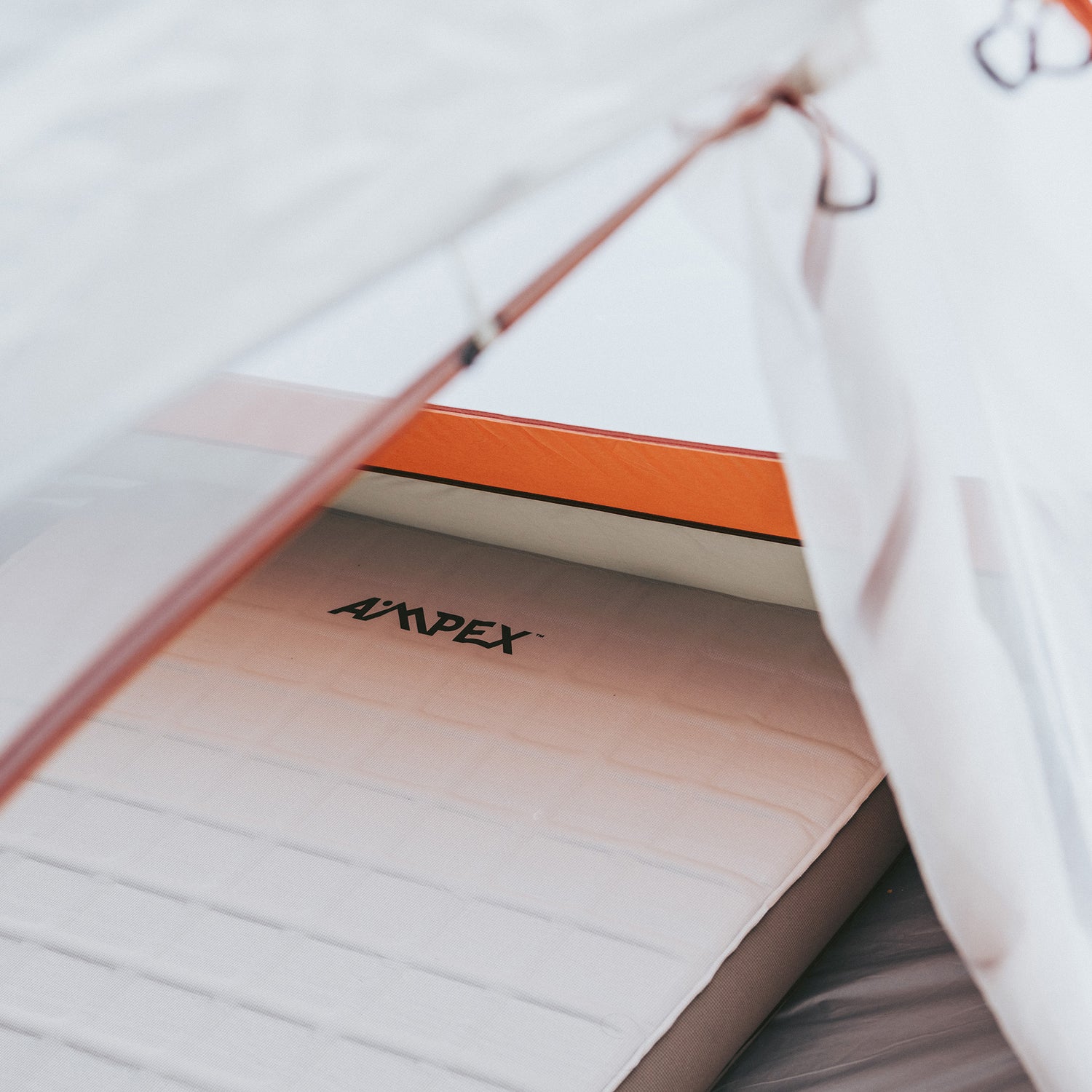
Ampex 4 Season Sleeping Pad – Best for Maximum Insulation
A plush self-inflating sleeping pad built for four-season camping and colder conditions. It provides a high 9.1 R-value, a 3.9-inch thickness, and a spacious 73 x 26-inch regular size. The pad uses open-cell foam with horizontal coring, durable TPU-coated recycled polyester materials, micro-adjust inflation control, two one-way deflate valves, and includes a pump sack, patch kits, compression straps, and carry bag.
How to Save Money on a Lightweight Sleeping Pad
Good lightweight sleeping pads can be expensive, but you can still save money. Look for sales, compare prices or consider last-season models from trusted brands.
Shop end-of-season sales, typically late summer and early fall, when outdoor retailers clear out current-year inventory.
Check verified promo codes and marketplace deals before checkout — outdoor gear regularly sees limited-time price drops that aren't always advertised on the brand's own site.
Consider last year's model. Sleeping pad technology moves slowly enough that a previous-generation pad is often just as good for a fraction of the price.
Bundle with other trail gear when retailers run sitewide discounts, since sleeping pads are frequently included in seasonal outdoor promotions.
Final Thoughts
For the right sleeping pad, focus on three things: warmth, weight and comfort. Choose the R-value based on the weather, then compare weight and thickness. Before buying, check prices and promo codes to save money.
Frequently Asked Questions
Most three-season backpackers should aim for 12–16 oz. Ultralight hikers can go as low as 8–11 oz, while four-season pads usually run 15–20+ oz because of added insulation.
For general three-season hiking, an R-value between 3.5 and 4.5 is a safe, versatile choice. Go higher (5–7+) only if you're regularly camping in freezing or snowy conditions.
Inflatable pads pack smaller and are more comfortable, making them the better pick for most hikers. Foam pads are heavier and bulkier but virtually indestructible, which appeals to hikers who prioritize reliability over comfort.
With reasonable care — including using a ground sheet and carrying a repair kit — a quality inflatable pad can last for years of regular use without major issues.
Generally yes for side sleepers, since more thickness keeps hips and shoulders off the ground. But thickness isn't the whole story — baffle design and internal chamber structure also play a big role in how stable and comfortable a pad feels.