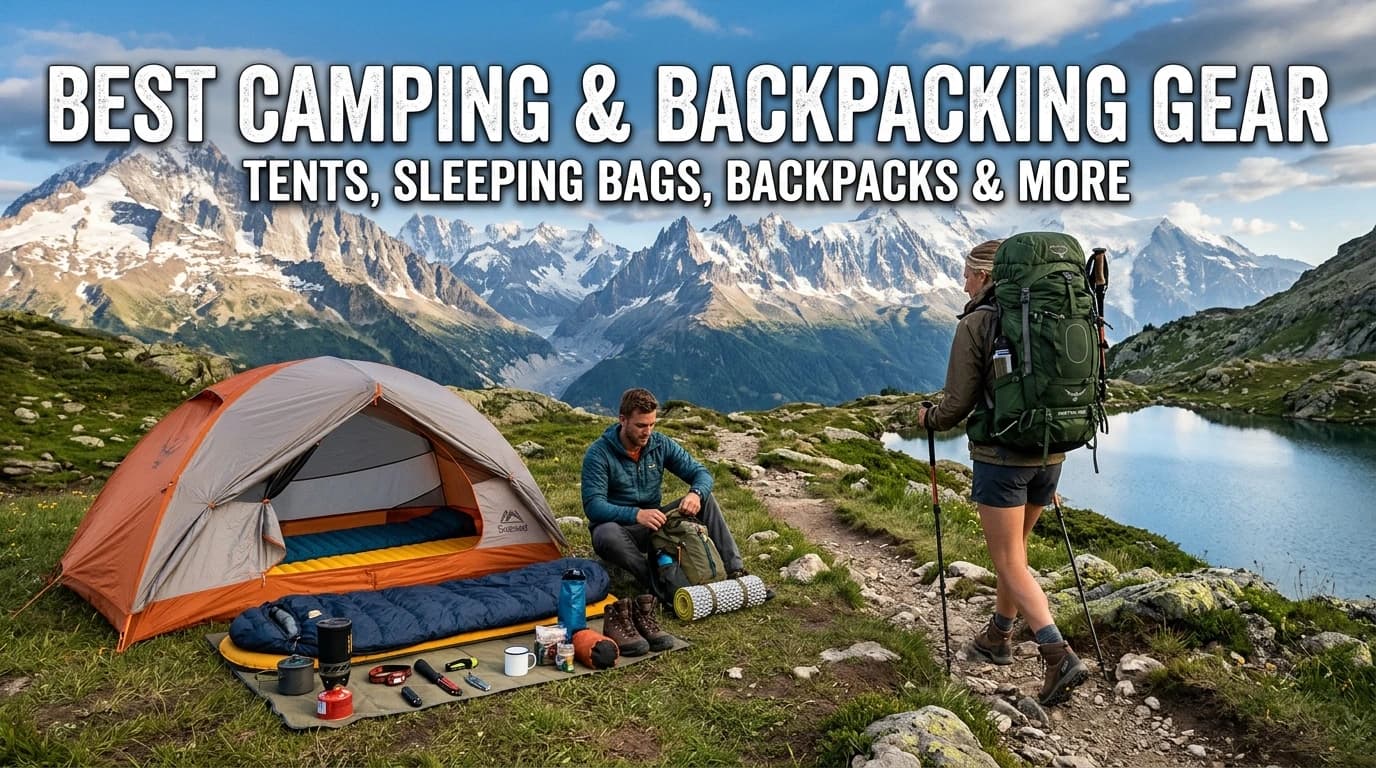
Best Camping and Backpacking Gear: Tents, Sleeping Bags, Backpacks & More
Every experienced hiker has a story about the trip where one piece of gear went wrong. A tent leaked, a pad deflated at 2 a.m. or a headlamp died on the walk back to camp. Good gear will not make you a better hiker but bad gear can quickly make a trip miserable.
This guide covers the best camping and backpacking gear across six categories: the hiking backpack lightweight backpacking tent, synthetic down sleeping bag, insulated camping pad backpacking headlamp and compact camp chair. For each one, you will learn what to look for what to skip and how to choose based on your style of trip.
How to Choose Camping and Backpacking Gear
Before comparing individual items, answer three questions:
Where are you going? Alpine trails, desert canyons and forest campsites call for different gear.
When are you going? Three-season gear (spring to fall) covers most trips. Winter camping needs a warmer sturdier setup.
How far are you carrying it? A car-camping weekend and a five-day trek have very different weight limits.
A good rule of thumb is to keep your total pack weight at roughly 10–20% of your body weight. Every ounce you save on the big items gives you room for the things that make camp enjoyable.
Hiking Backpack:
Your hiking backpack carries everything else, so fit matters more than features. A great pack that does not fit your torso will hurt after the first mile.
Choose a hiking backpack based on capacity, fit, and comfort. A 30–50L pack suits weekend trips, while 50–70L is better for multi-day hikes. Look for an adjustable hip belt, a supportive back panel, accessible pockets and water-resistant fabric or a rain cover.
Pros:
Helps distribute weight across the hips.
Offers storage for hiking essentials.
Suitable capacity options for different trip lengths.
Cons:
A larger backpack can feel heavy when fully loaded.
Poor fit may cause discomfort.
Extra features can increase the price.
Best For: Weekend hikers, multi-day backpacking trips and outdoor adventures.
Lightweight Backpacking Tent:
A lightweight backpacking tent keeps you dry, blocks wind, and gives you a place to recover. The goal is the best protection per ounce.
Pros:
Lightweight and easy to carry on hiking trips.
Protects against wind and rain.
Provides a comfortable shelter for overnight camping.
Cons:
Lightweight models may offer less interior space.
Some designs can be difficult to set up in strong winds.
Best For: Backpackers hikers and campers looking for lightweight shelter on overnight trips.
Synthetic Down Sleeping Bag:
The synthetic down sleeping bag has become popular because it fills the gap between traditional down and basic synthetic insulation. It offers warmth with better performance when damp.
Pros:
Provides good warmth in cool weather.
Retains insulation better than traditional down when damp.
Usually easier to maintain and clean.
Cons:
Can be bulkier and heavier than natural down.
May offer a lower warmth-to-weight ratio than premium down sleeping bags.
Best For: Campers and backpackers who need reliable warmth in damp conditions and easy-care insulation.
Insulated Camping Pad:
Many campers blame their sleeping bag for a cold night when the real culprit is the ground. A sleeping bag’s insulation compresses under your body weight so it does very little underneath you. That is the job of an insulated camping pad.
Pros:
Provides insulation from cold ground.
Improves comfort while sleeping outdoors.
Helps retain body heat throughout the night.
Cons:
Adds extra weight to your camping gear.
Some models can be bulky when packed.
Best For: Campers and backpackers who want better warmth and comfort while sleeping outdoors.
Backpacking Headlamp:
Camp chores, midnight bathroom runs, and unexpected late finishes are all easier with a good backpacking headlamp.
Pros:
Keeps your hands free in the dark.
Makes nighttime tasks and hiking easier.
Lightweight and easy to pack.
Cons:
Requires battery charging or replacement.
Battery life may decrease at higher brightness levels.
Best For: Backpackers, hikers, and campers who need hands-free lighting at night.
Compact Camp Chair:
After a long day on the trail, sitting on a log is fine. Sitting in a compact camp chair is better. Backpackers sometimes skip chairs to save weight, but modern ultralight designs make them more reasonable than ever.
Pros:
Provides comfortable seating at the campsite.
Lightweight designs are easy to carry.
Folds compactly for convenient storage.
Cons:
Adds extra weight to your backpack.
May be less stable on uneven ground.
Best For: Campers and backpackers who want comfortable seating during outdoor trips.
Common Gear Mistakes to Avoid
Buying everything at once: Start with essential gear and add more as needed.
Ignoring fit: Choose backpacks and sleeping gear that suit your needs.
Skipping test runs: Test your tent, sleeping pad, and backpack before your trip.
Overpacking: Carry only essential items to reduce weight.
Poor maintenance: Clean and dry your gear before storing it.
Final Thoughts:
Choosing the right camping and backpacking gear makes every outdoor adventure more comfortable and enjoyable. Focus on essential items like a hiking backpack, lightweight tent, sleeping bag, insulated camping pad, and reliable lighting. Compare features, weight, and prices to find gear that suits your needs and budget.
Questions & Answers
Frequently Asked Questions
How much should a backpacking tent weight?
Many backpackers aim for around 2–3 lbs per person. Lighter tents cost more and sometimes trade away durability or space.
Is a synthetic down sleeping bag better than a natural down bag?
It depends on your priorities. Synthetic bags handle moisture better, are easier to care for, and are usually less expensive. Natural down is typically lighter and more compressible for the same warmth.
What R-value do I need for a camping pad?
For three-season camping, aim for roughly R 2–4. For cold weather and winter, choose R 4 or higher.
How many lumens do I need in a backpacking headlamp?
For most backpacking, 200–400 lumens is plenty. Pick one with a red-light mode and consider your battery type.