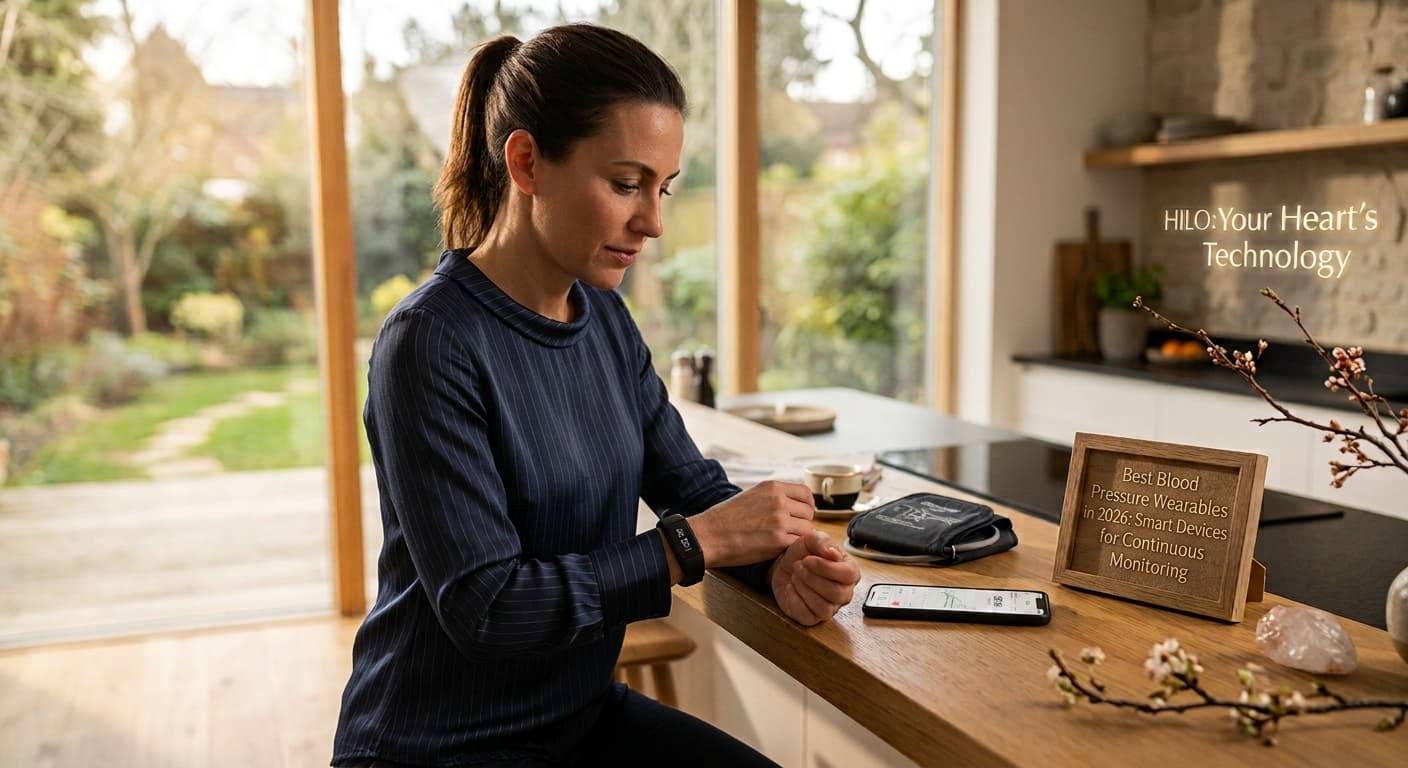
Checking your blood pressure usually means stopping what you’re doing, putting on a cuff, and waiting for a reading. But what if you could track your blood pressure patterns while simply going about your day?
This is where the blood pressure wearables come in. These smart devices are supposed to make it easier to track blood pressure and, depending on the device, can give information about patterns over time.
In this guide, we’ll explore what to consider when selecting the best blood pressure wearables in 2026, including how Hilo fits into the expanding wearable health technology market.
How Do Blood Pressure Wearables Work?
A blood pressure wearable is a device designed to gather blood pressure-related information while you wear it. Some wearable devices can collect data throughout the day, unlike a traditional monitor that gives you a reading only when you use it.
This can make it easier to see changes and patterns, instead of looking at one reading at a time.
But not all the smartwatches and fitness trackers that mention blood pressure are made equal. Some are made specifically for blood pressure monitoring; others offer estimates or wellness information.
What to Look for in the Best Blood Pressure Wearables
When buying a wearable blood pressure monitor, don’t just look at the design.
Monitoring Approach
See how the device measures blood pressure. Some wearables use optical sensors, others a small cuff, or couple with a traditional cuff.
Accuracy and Verification
This is one of the most crucial things to verify. Read for clinical testing information and medical certification and validation standards, not just marketing claims.
Battery Life
A wearable should be a practical device for daily use. Longer battery life means less time taking it out and charging it.
App and Data Tracking
A good companion app will present your information in an easy-to-understand way. Clear trends, historical data, and reports can be useful when you want to see how your readings change over time.
Hilo Band: A Different Approach to Blood Pressure Tracking
Unlike standard blood pressure monitors, Hilo operates with a combination of smart technology, the app, and the reference cuff to simplify blood pressure tracking. The idea behind the technology is to gather and organize the blood pressure data while performing your daily activities.
Hilo Band
The Hilo Band (an unusual blood pressure-monitoring device) has a special design to serve only the purpose of tracking blood pressure.
Designed for daily use
Intended for blood pressure monitoring
Measures blood pressure throughout daily routine
Water-resistant, class 68
Great for swimming and showering, but not for diving
Hilo App
The Hilo App manages Band data for better understanding of trends on blood pressure.
Presents the data gathered by the device.
Allows tracking the blood pressure changes.
Serves as a platform for analysis.
Hilo Cuff
The Hilo Cuff is a part of the monitoring system used for comparison purposes.
Designed for cuff-based measurements.
User for calibrating the Hilo Band.
Works as part of the Hilo monitoring system.
Why Continuous Monitoring Can Be Useful
A single reading of blood pressure only tells you what was happening at that moment.
Your blood pressure may vary during the day because activity, stress, sleep, and other factors can affect your blood pressure. Wearable technology can help to build a longer record, to make it easier to see patterns, rather than relying on the occasional reading.
That’s a big reason why people are interested in continuous blood pressure monitoring.
But wearable data shouldn’t be considered a diagnosis by default. If you think you may have a problem with your blood pressure, it’s important to talk to a qualified health care professional about your readings.
| Feature | Blood Pressure Wearables | Traditional Blood Pressure Cuffs |
|---|---|---|
| Measurement | Can collect data throughout the day, depending on the device | Takes a reading at a specific time |
| Convenience | Designed for everyday wear and tracking | Requires you to stop and take a measurement |
| Accuracy | Depends on the device, technology, and clinical validation | Upper-arm cuffs are widely used for blood pressure measurements |
| Data Tracking | Can show trends and historical data through an app | Usually focuses on individual readings |
In some cases, both can work together, giving you the convenience of wearable tracking and the reference readings provided by a traditional cuff.
Are Blood Pressure Wearables Worth Considering in 2026?
If you are looking for a straightforward solution to monitor changes in blood pressure, you should definitely consider wearable tech.
But instead of selecting the device merely based on its appearance or an assumption, you are better off making your choice based on how the device measures data and whether it is approved for use, how long it works on a single charge, what apps are available with it, and how you intend to use it.
What makes the Hilo Band unique is the fact that blood pressure is the primary function of the wearable band, unlike most other devices that combine blood pressure measurement with other functions associated with physical activity.
Conclusion
As health technology continues to improve, wearable blood pressure devices are making health tracking more convenient. But choosing the right device means looking beyond its design. Consider its measurement technology, accuracy, app features, battery life, and clinical validation before making a decision.
The Hilo Band is one example of how wearable technology is evolving to make blood pressure tracking easier in everyday life. If you’re considering a smart health device, take time to compare its features and price with other options before buying.
Looking for better deals on smart health and tech products?
Explore the latest verified deals and buying guides at BestSavingDealz to compare your options and save on your next purchase.
Questions & Answers
Frequently Asked Questions
Question: How often should you use a blood pressure wearable?
Answer: It depends on the device and how it is designed to collect data. Some wearables can track information throughout the day, while others require specific measurements. Follow the manufacturer's instructions for proper use.
Question: Are blood pressure wearables accurate?
Answer: Accuracy depends on the device and its technology. Before buying, check whether the device has undergone clinical testing or validation.
Question: Can a smartwatch continuously monitor blood pressure?
Answer: Some smartwatches offer blood pressure-related features, but not all provide continuous or clinically validated blood pressure monitoring. Always check the device’s specifications.
Question: What is the Hilo Band used for?
Answer: Hilo Band is designed for blood pressure monitoring and can collect data during everyday activities. It works with the Hilo App and a reference cuff as part of the Hilo system.
Question: What to consider before buying a wearable for blood pressure?
Answer: How it records blood pressure, whether it is accurate, how long the battery lasts, features of the app, and whether it is comfortable and water-resistant.