
A bad backpack can make any hiking trip uncomfortable. The right backpack helps you carry your gear comfortably and enjoy the journey.
In this guide, you'll learn about the best hiking and camping backpacks, how to choose the right size and fit and which features are actually worth paying for.
How to Choose the Best Hiking and Camping Backpack
Before jumping into recommendations, it helps to understand what actually separates a good pack from a great one.
Capacity (Volume in Liters)
20–35L — Day hikes and short overnights
40–55L — Weekend trips (2–3 nights)
55–75L+ — Multi-day backcountry trips and extended camping
Fit and Torso Length
A pack that fits your torso length — not your height — is critical. Most quality brands offer size-specific frames (S/M/L) rather than one-size-fits-all designs.
Suspension System
Look for a supportive hip belt (which should carry roughly 80% of the load), an adjustable back panel and load-lifter straps that pull weight closer to your body.
Weight
Ultralight packs (under 3 lbs) sacrifice some durability and structure for speed. Traditional packs (4–6 lbs) offer more support for heavier loads.
Weather Resistance
Look for durable, water-resistant fabrics and consider a rain cover if the pack isn't fully
Waterproof.
How Much Weight Should I Carry?
A comfortable backpack should carry your gear without making the hike feel unnecessarily difficult. Your ideal pack weight depends on the length of the trip, the equipment you're carrying and your personal comfort level.
For longer hikes, focus on carrying only the gear you actually need. A well-fitted backpack with a supportive hip belt can also make a loaded pack feel more comfortable by distributing the weight across your body.
Before heading out, pack your essentials first and remove items that are unlikely to be useful. Keeping the load organized and balanced can make a noticeable difference on longer trails.
Internal vs. External Frame: What's the Difference?
Most modern hiking backpacks use an internal frame, which sits inside the backpack and helps keep the load close to your body. This design provides good stability and is especially useful when hiking on uneven or more challenging terrain.
Internal-frame backpacks are generally streamlined, comfortable and easier to balance while moving. They're also the most common choice for modern hiking and camping.
External-frame backpacks have a visible frame outside the main pack. They can provide good ventilation and make it easier to organize or attach certain types of gear, but they are usually less common for modern recreational hiking.
For most hikers, an internal-frame backpack is the simpler choice because it offers a good combination of stability, comfort and ease of movement.
Best Backpacks for Hiking and Camping in 2026
If you're looking for solid, wallet-friendly options outside the big outdoor brands, Ampex Gear's lineup is worth a look. Here's how their three main hiking backpacks stack up.
Ampex 65L Hiking Backpack
A full-size, frame-supported pack built for multi-day backcountry trips, with a load range of roughly 26–42 lbs, an adjustable frame and hip belt, hydration sleeve and a rain cover tucked into the bottom pocket.
Pros:
Large enough for 3+ night backcountry or hunting trips
Adjustable frame, sternum strap and hip belt for a custom fit
Included rain cover and hydration reservoir sleeve
Ventilated back panel keeps you cooler on long carries
Plenty of exterior attachment points and hip belt pockets
Cons:
At roughly 4.5 lbs, it's heavier than premium ultralight packs in this capacity
Hip belt padding can feel too narrow for heavier loads, per user reviews
Fixed frame sizing (built for 5'7"–6'9") won't suit shorter hikers as well
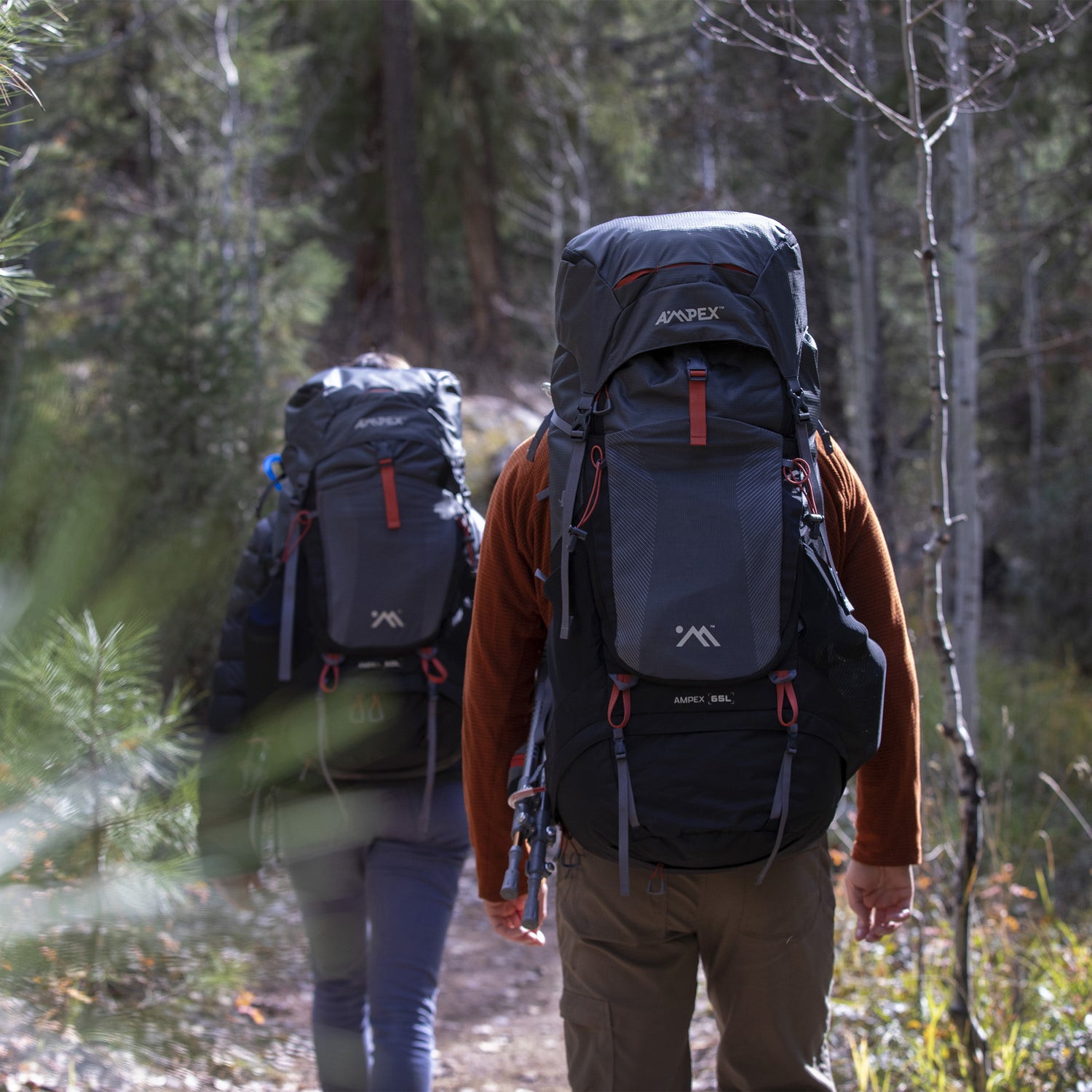
Ampex Hiking Backpack 65L – Best for Multi-Day Hiking
A spacious 65L hiking backpack with an adjustable frame, ventilated back panel, hydration reservoir sleeve, hip-belt pockets, removable top lid, sleeping-bag compartment and included rain cover. It is designed for multi-day and group outdoor trips.
Ampex 50L Hiking Backpack
A middle-ground pack suited to weekend trips, with a load range of about 24–35 lbs and the same core feature set as the 65L — adjustable suspension, hydration sleeve and included rain cover.
Pros:
Great balance between packable size and real carrying capacity
Reviewers consistently praise the number and layout of storage pockets
Comfortable structural support for a budget-tier pack
Large, glove-friendly zipper pulls
Cons:
Still fairly bulky for anyone wanting a true minimalist weekend setup
Sizing runs for taller users (5'7"–6'7"), less ideal for petite hikers
Some buyers note the phone pocket is too snug for larger phones
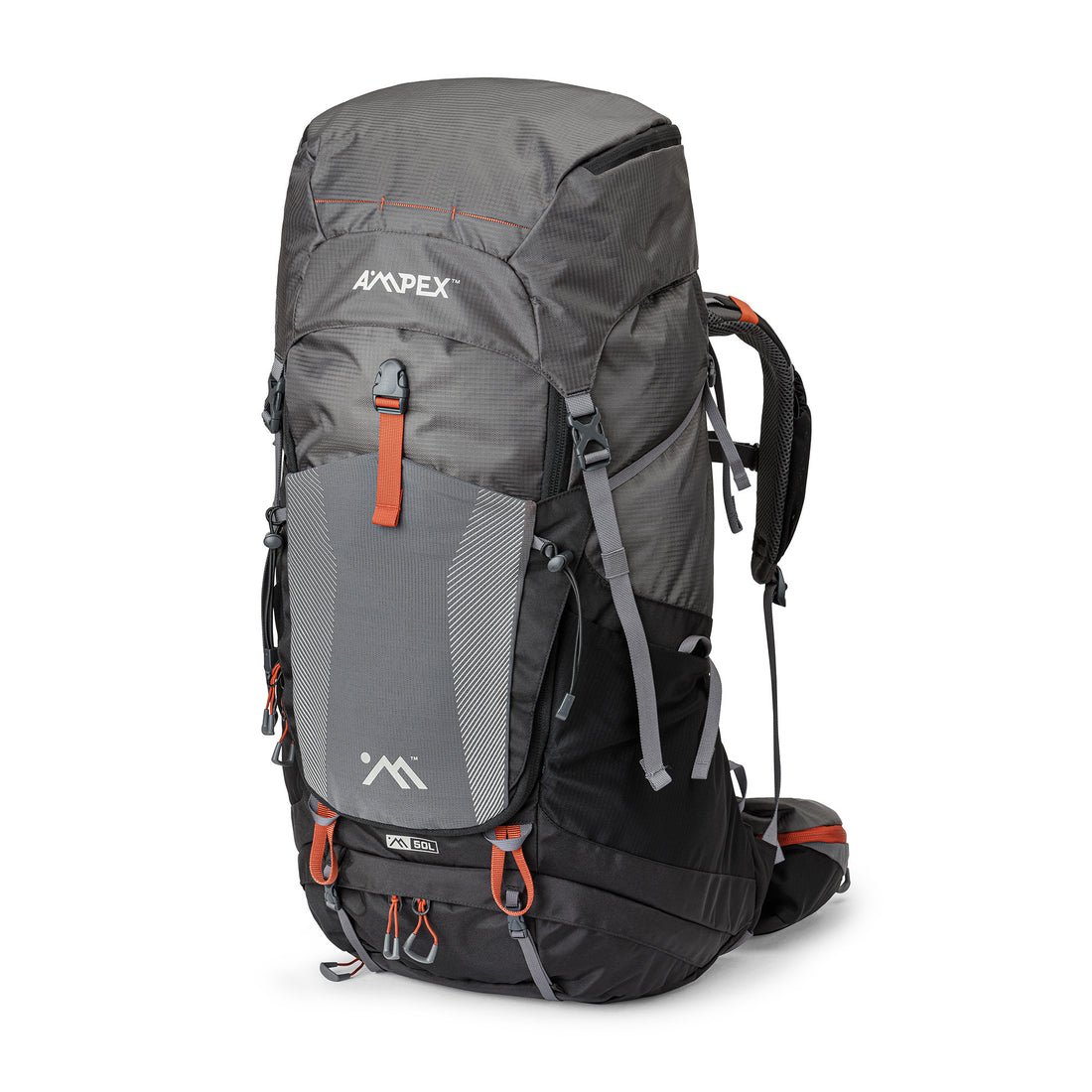
Ampex Hiking Backpack 50L – Best All-Around Hiking Pack
A versatile 50L hiking backpack with an adjustable frame, ventilated back panel, hydration sleeve, multiple storage pockets, removable top lid and rain cover. A practical choice for hiking, camping and multi-day outdoor adventures.
Ampex 35L Trekking Backpack
The most compact of the three, designed for overnight trips or ambitious day hikes, with a lighter frame (around 3 lbs 7 oz) and a load range of roughly 13–24 lbs.
Pros:
Lightest and most packable of the Ampex lineup — good for overnighters
Ventilated mesh back panel adds comfort on warmer trails
Detachable top lid doubles as a small daypack
Most affordable entry point into the Ampex range
Cons:
Some reviewers report the adjustable frame buckle can slip under load
Side water bottle pockets are hard to reach while wearing the pack
Not enough capacity for true multi-day backcountry trips
No dedicated gear loops for carabiners

Ampex Hiking Backpack 35L – Best for Day Hikes
A compact 35L hiking backpack featuring an adjustable frame, ventilated back panel, hydration reservoir sleeve, hip-belt pockets, water-bottle pockets and an included rain cover. It's suited to day hikes, short excursions and overnight treks.
Best Backpacks for Hiking and Camping in 2026
Choosing the right backpack depends on how much gear you need to carry and how long you'll be on the trail. The comparison below highlights the key differences between Ampex's most popular hiking backpacks
Backpack | Capacity | Best For |
Ampex 35L Trekking Backpack | 35L | Day hikes and overnight trips |
Ampex 50L Hiking Backpack | 50L | Weekend camping and 2–3 day adventures |
Ampex 65L Hiking Backpack | 65L | Multi-day hiking and extended camping |
Final Thoughts
The best hiking and camping backpack depends on your trip style. A small daypack is great for short hikes, while larger packs are better for multi-day adventures. Focus on comfort, fit and the right size instead of extra features. Choose a backpack that matches your usual trip length and if possible, try it with some weight before buying.
Frequently Asked Questions
20–35L is generally suitable for day hikes and short overnights, 40–55L works well for weekend trips and 55–75L or more is better for extended multi-day adventures.
A well-fitted hiking backpack can generally carry around 20–30% of your body weight, with beginners better off starting closer to the lower end.
Premium backpacks often provide better suspension, durable materials and more precise fit. For occasional day hikes, however, a budget-friendly pack can be sufficient.
Measure your torso length rather than relying only on height. The hip belt should sit comfortably on your hip bones and carry most of the backpack's weight.
A 40–55L backpack is generally a good choice for weekend trips lasting around two to three nights.